Assistive Robotics
Background
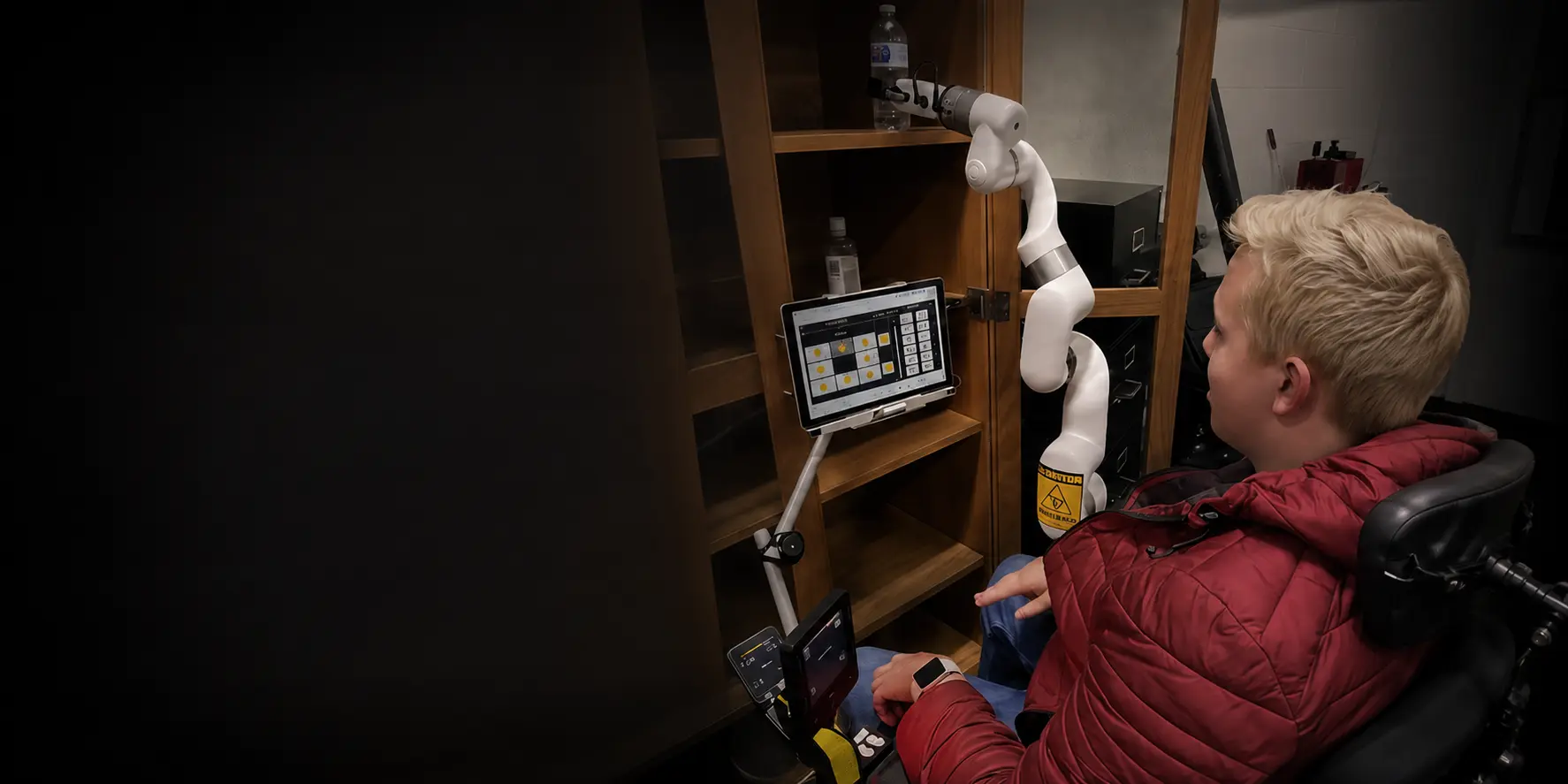
Millions of people worldwide live with upper-limb impairments caused by stroke, spinal cord injury, cerebral palsy, ALS, and other conditions. Daily activities such as picking up objects, eating, and opening doors often require assistance from others. This is why wheelchair-mounted assistive robotic arms are attracting strong interest.
However, building these systems for research requires a development platform that supports rapid trial and error, validation, and later migration. Commercial and medical-grade assistive robotic arms are expensive and are not designed for repeated experimentation. This creates a key challenge for researchers.
Research Barriers

The Limits of Existing Options
Commercial and medical-grade assistive robotic arms are costly, making them unsuitable for repeated testing and multi-project use under research budgets.
Closed platforms make it difficult to integrate different input methods, such as eye tracking and joysticks, limiting algorithm validation.
Early in-house prototype hardware is often unstable, slowing research iteration and increasing the cost of trial and error.
 01
Reliable Assistive Testbed
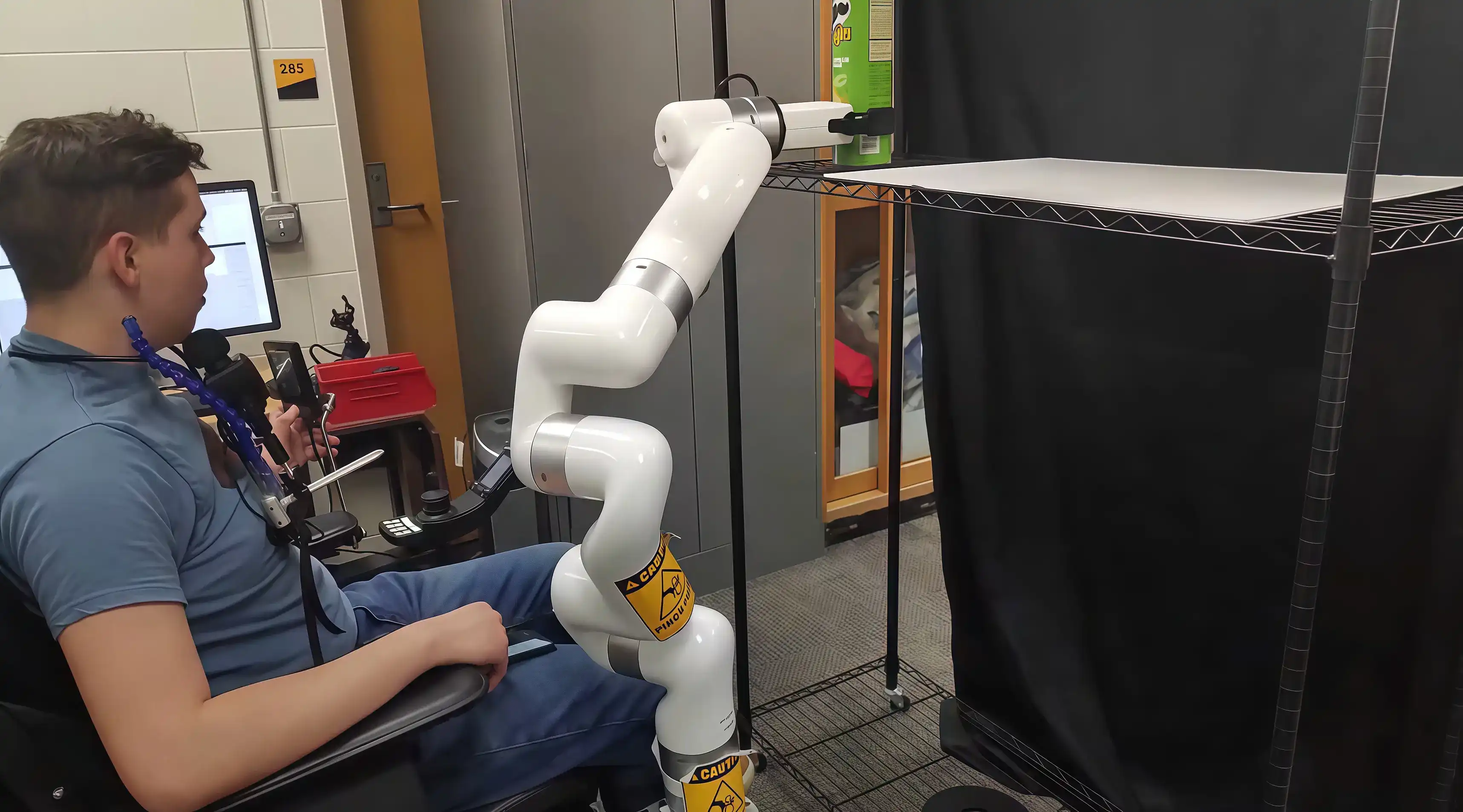
xArm 6 provides a stable collaborative robot platform for wheelchair-mounted assistive research, helping teams validate eye-gaze, joystick, and vision-guided control before migrating to custom prototypes.
 02
Real ADL Capability
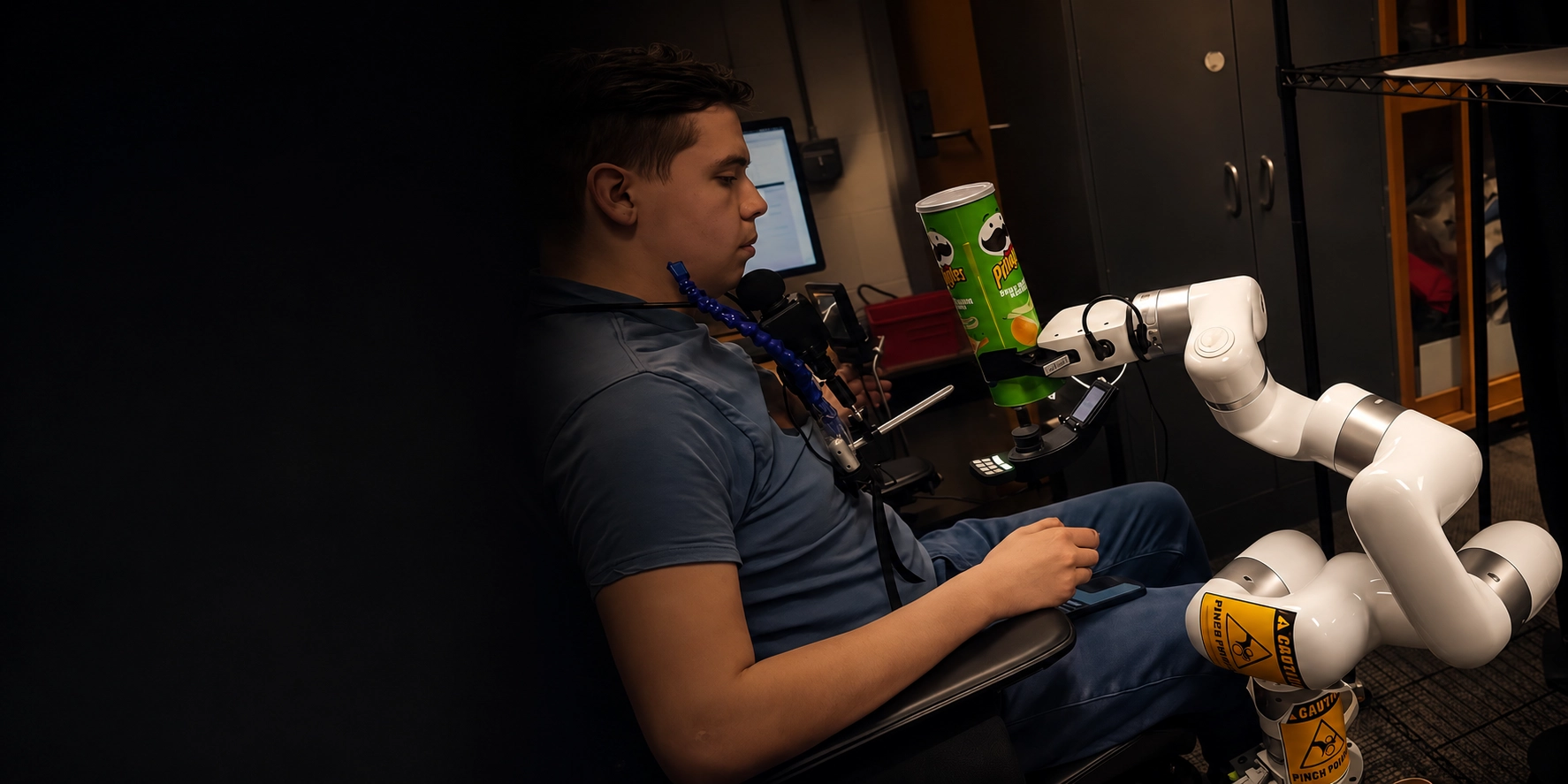
Six-axis motion and a practical workspace support activities of daily living, including object pickup, eating assistance, door opening, and other real-world assistive manipulation tasks.
 03
Suitable for Wheelchair Mounting
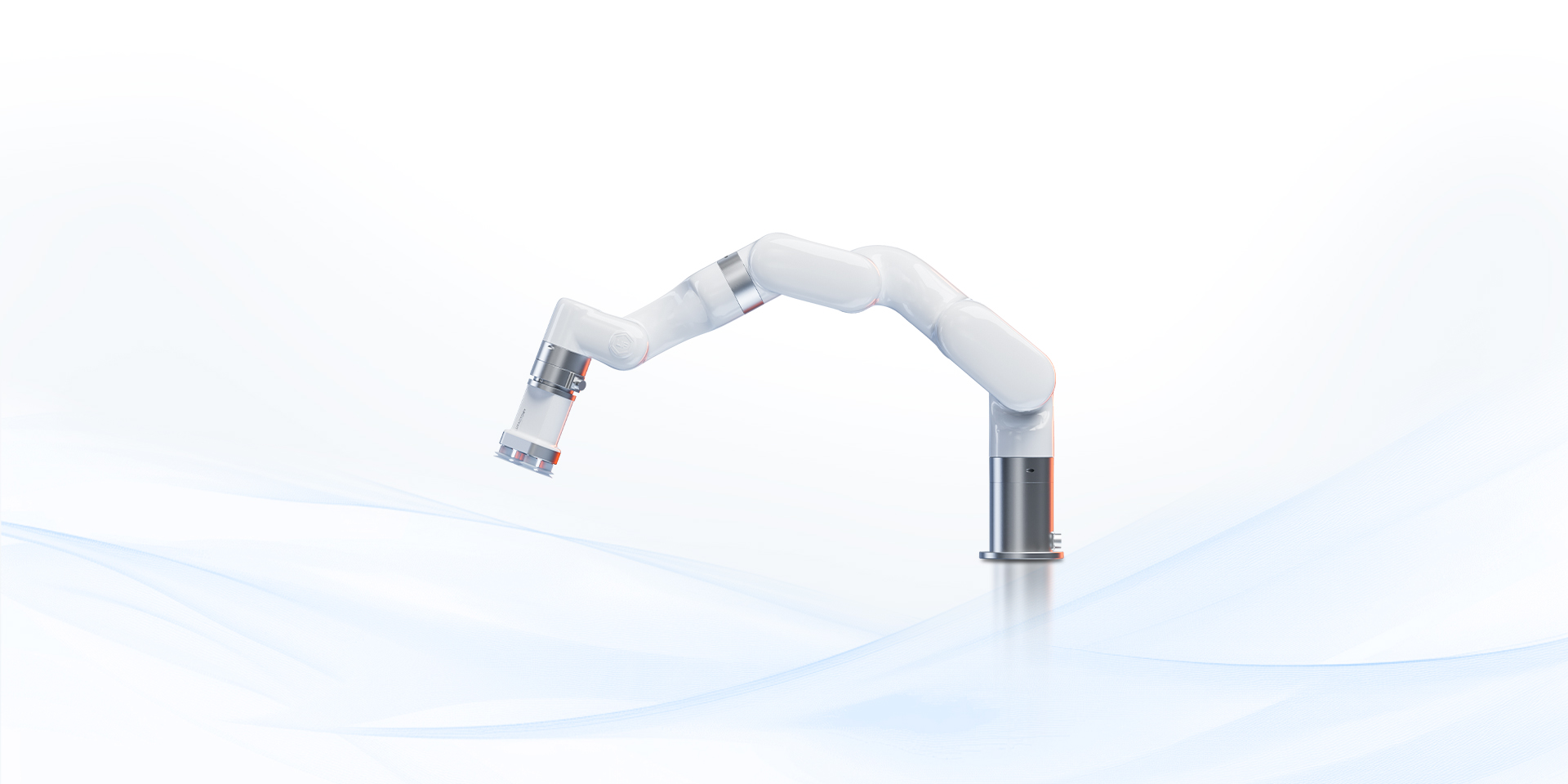
The compact, lightweight arm body supports power-wheelchair integration with limited impact on balance, maneuverability, or onboard space.
 04
Research-Budget Friendly
Compared with medical-grade assistive arms, xArm 6 helps universities and labs control hardware costs while supporting long-term, multi-project research.
 05
Open Control Ecosystem
Python and C++ SDKs let teams build custom control frameworks and integrate eye tracking, joysticks, vision recognition, and other assistive input methods.
 06
Multiple Control Modes
UFACTORY xArm 6 supports RS-485 communication and the Modbus RTU protocol, with current, torque, velocity, and position control modes available through the SDK.
These interfaces give researchers flexible room to develop motion control, force interaction, and related work.
 07
Vision-Ready Integration
Depth camera integration enables object detection, 3D localization, pose estimation, and semi-autonomous grasping for assistive systems moving beyond manual control.
Not sure which model fits your workflow?
Our team will match the right robot and configuration to your needs.