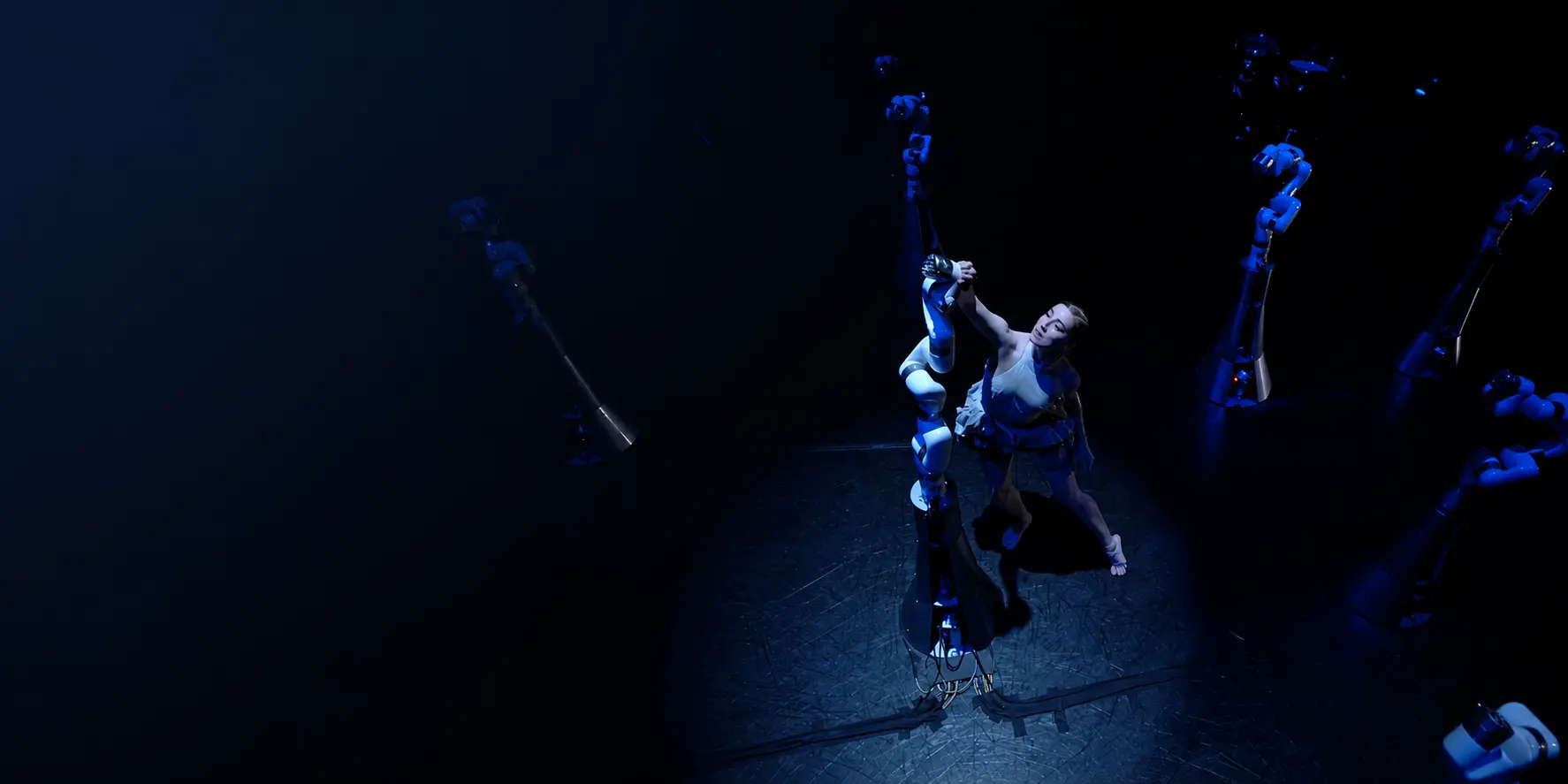
Interactive Art Installation
Industry Background
Interactive art installations are growing rapidly in exhibitions, brand spaces, and public art. Audience participation and real-time interaction are at the core of these works, which often need to run stably for long periods without supervision during the exhibition period.
However, traditional industrial robots are heavy, require safety fencing, and use closed systems, making them difficult to apply in open interactive and creative development scenarios. This runs counter to the openness and closeness that interactive art seeks to create.
Industry Pain Points

Safety, Openness, and Endurance
Industrial robots require safety fencing and cannot support open interaction with audiences.
Closed systems make it difficult to connect sensors and creative development environments, limiting the realization of artistic concepts.
Exhibitions can last weeks or even months, requiring long-term, stable, unattended operation.
 01
Cost-Effective
Compared with similar collaborative robots, UFACTORY offers a more competitive starting price, helping artists and creative teams deploy high-quality robotic art installations under limited budgets.
 02
Lightweight and Easy to Relocate
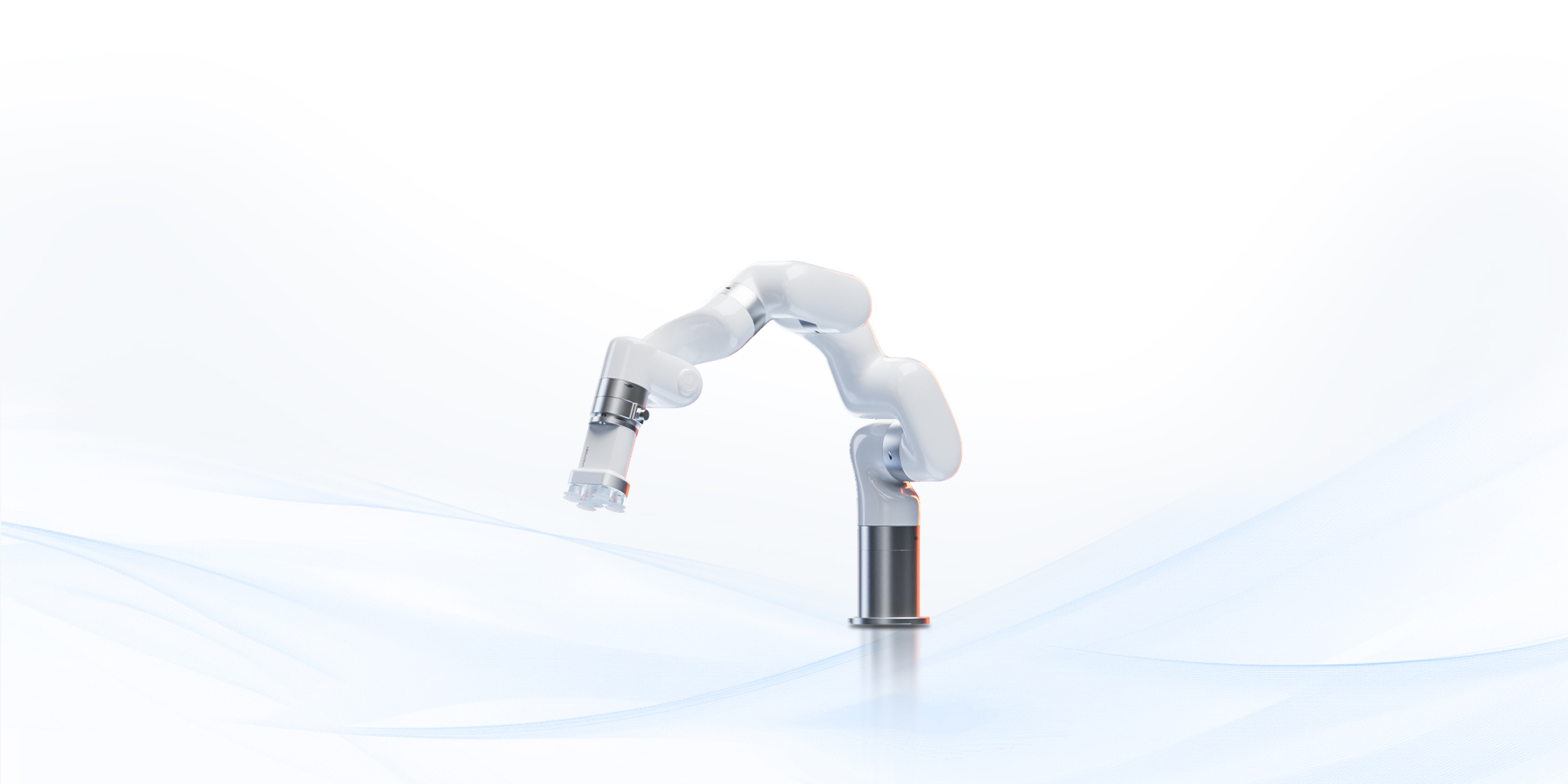
The carbon-fiber body is clean and distinctive, meeting the visual presentation needs of art installations. The robot body is lightweight and compact, making it easy to relocate and deploy quickly across different venues.
 03
Safe Collaboration
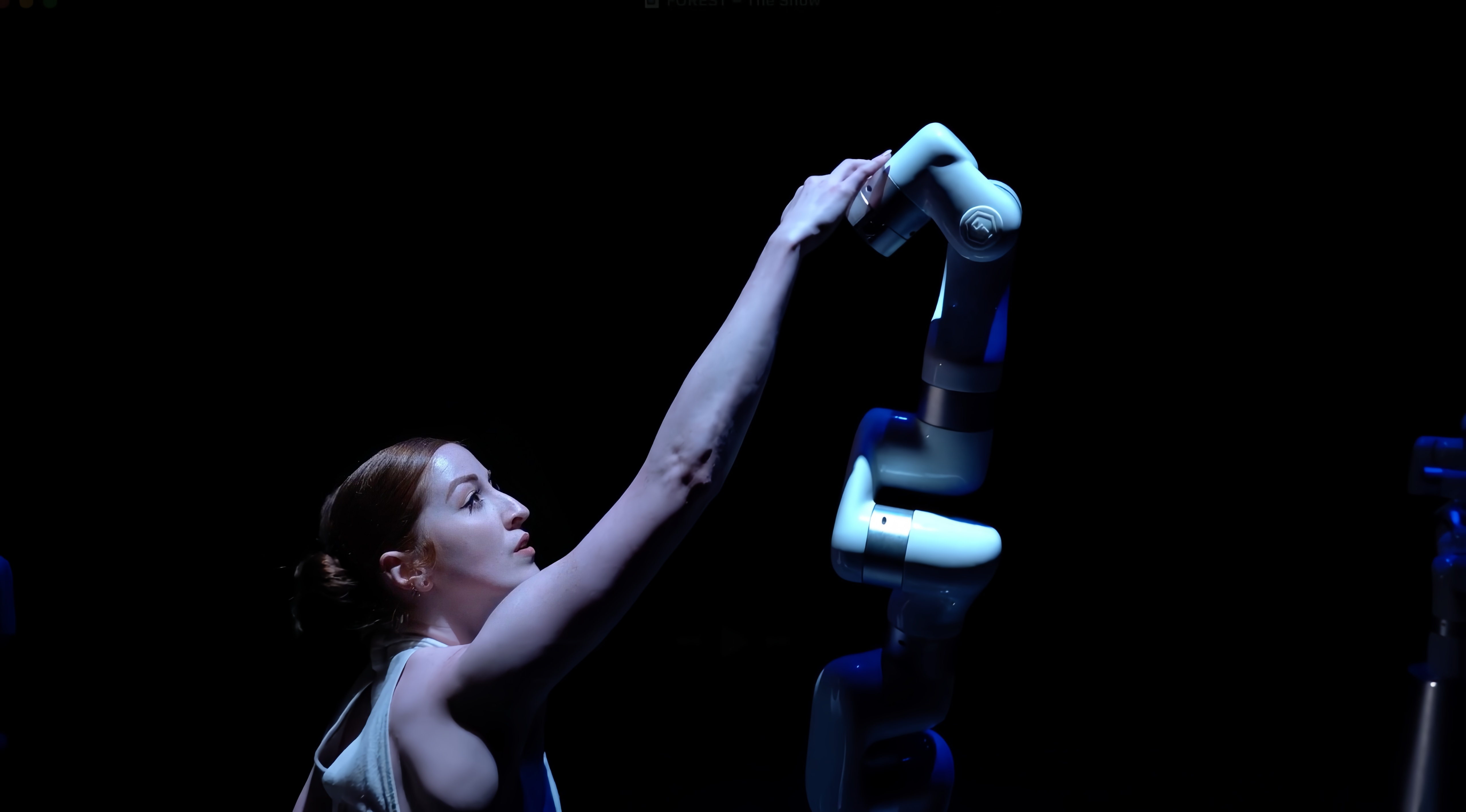
Built-in collision detection enables safe operation without large safety fences when audiences watch or interact from close range. This provides a basic safety foundation for open interactive art installation scenarios.
 04
Open Development Platform
The robot supports ROS/ROS2 packages, as well as Python and C++ SDKs. After processing interactive data, developers can directly send motion commands to the robot and flexibly connect sensors, cameras, lighting, sound, and other creative development environments. This allows artistic concepts to be freely transformed into real robotic motion.
 05
Smooth and Natural Motion
High response speed and smooth trajectory control make every movement natural and continuous, creating a more engaging visual experience in real-time audience-facing interaction scenarios.
 06
Reliable Operation
The robot can be exhibited continuously for weeks or even months in exhibitions, showrooms, and commercial spaces. It maintains consistent and stable motion through repeated daily operation, runs reliably.
Customer Showcase
Not sure which model fits your workflow?
Our team will match the right robot and configuration to your needs.